

“One More Question”: When Your Child Asks Endless Questions at Bedtime
By the Wonderbin team · October 21, 2026
The room is dark, the story is finished, and then: “Why does the moon follow our car?” “Where do socks go?” “What happens when we die?” Bedtime seems to be when children’s questions arrive in force — and when parents are least equipped to answer them. The trick is to treat the questions as a good sign without letting them run the evening.
Why the questions come out at lights-out
All day, a child is busy: playing, moving, being told what happens next. At bedtime the noise stops, and a brain that has been collecting puzzles all day finally has room to notice them. There is often a second reason underneath, too. A question is a reliable way to keep a parent in the room, and a child who isn’t quite ready to be alone may not know how else to ask for five more minutes. Most of the time it’s both at once: real curiosity, and a wish for a little more company.
Answer kindly, keep the shape of the evening
- Make a “question time” earlier. Ten minutes at dinner or in the bath, where you invite questions on purpose. A child who has been heard at 6 pm needs fewer answers at 8.
- Agree the number up front. “Two questions after the story, then lights out” is easier to hold than a mid-conversation “that’s enough”. Let them choose which two matter.
- Answer briefly and truthfully. A short answer pitched at their age is plenty. You can always add more tomorrow; you can’t easily unsay a long, frightening explanation at 8.30 pm.
- Turn it back to them. “What do you think?” is often what the child wants, and the answers can be wonderful. It also gives you a moment to think.
- It’s fine to say “I don’t know”. Follow it with “let’s find out in the morning” — and then actually do, so the promise is worth something.
- Park big questions kindly. A notebook or a “question jar” by the bed lets the question be kept rather than dismissed. Write or draw it, and say you’ll look at it together after breakfast.
When the question is really a worry
Listen for the feeling underneath. “Will there be a storm tonight?” is rarely a weather question. When the questions loop or return in the same words every night, they’re usually about fear, not facts, and more information won’t settle them. Name the worry briefly and warmly — “It sounds like you’re wondering whether you’re safe” — then answer that. For a longer approach, see helping an anxious or worried child settle.
Questions that are really stalling
If the questions get sillier and the giggles louder as the clock moves on, you’re probably looking at a child who isn’t tired yet. Stay warm and boring: one calm answer, a kiss, and out. There are more ideas in what to try when your child isn’t tired and keeping a toddler in bed.
Stories for the child who always asks why


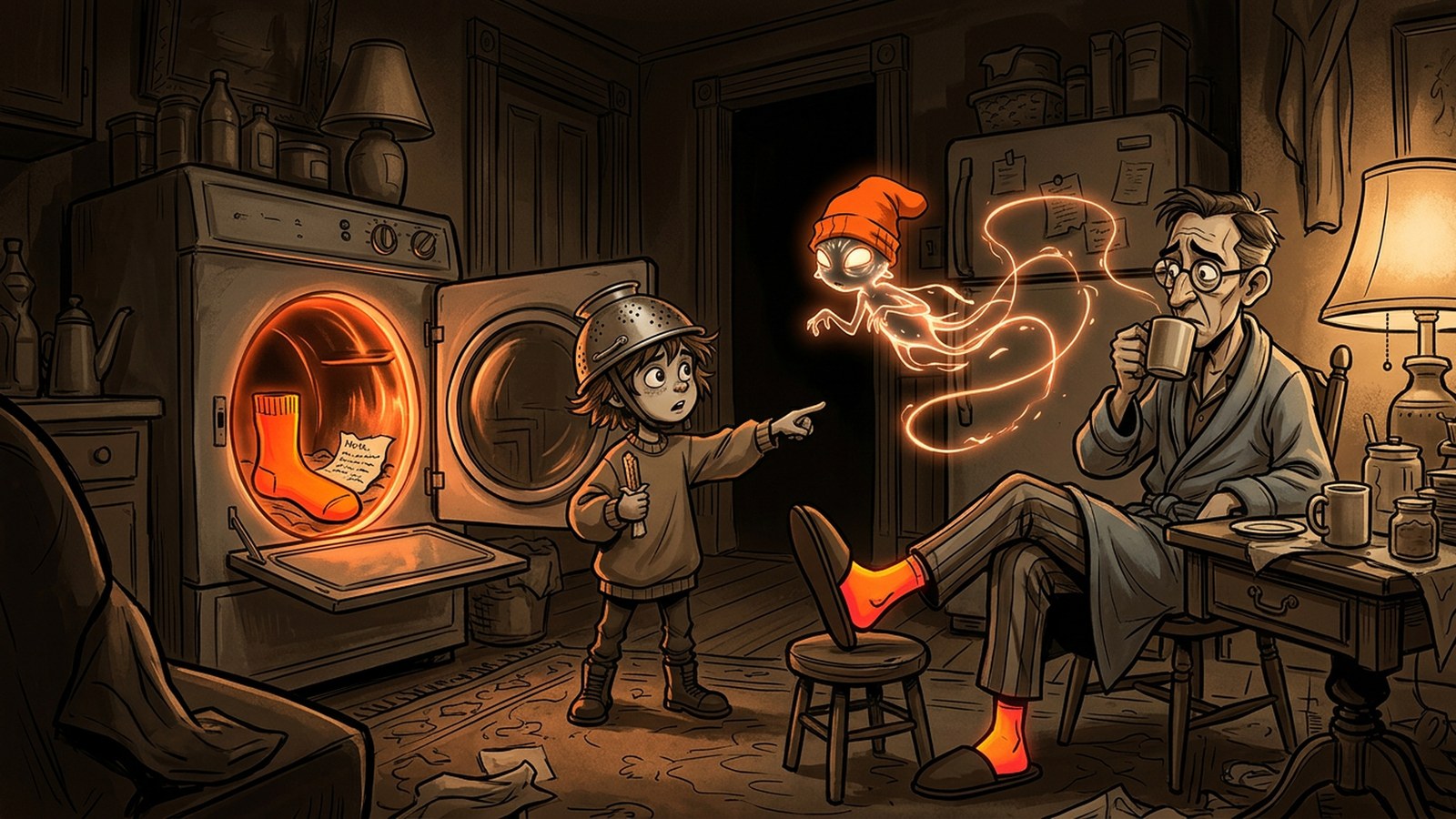


These stories take a child’s “why” seriously. The Great Big Earth Hug explains why things fall down as a gentle hug from the Earth, and The Counting Trick Between Lightning and Thunder gives a nervous child something to do while the weather rumbles.
Stories that lean on wonder rather than answers





Some questions don’t have tidy answers, and that’s fine. These tales leave room to wonder: a mushroom hunting for a name, a doll finding the face that belongs to her. A story is also a good place to park a big question so that it can travel to sleep with the child. Afterwards, if you want to ask questions of your own, try these low-key prompts for after the story. More calm choices live in our learning stories and bedtime collection.