

Bedtime After Something Scary on Screen: Films, Cartoons and Upsetting News
By the Wonderbin team · November 19, 2026
It might be a cartoon villain that turned out to be more frightening than expected, a clip on a phone, or a news item overheard from the next room. Whatever the source, bedtime is when the picture comes back — the lights go off, the house goes quiet, and a small mind replays what it saw. Here is how to help a child settle on the night when something frightening has stuck.
Why it hits harder at bedtime
In the daytime there is noise, company and distraction. At lights-out all of that is gone, and a young child — who is still learning the difference between “on the screen” and “in the room” — has nothing to hold their attention except the memory. It is common, and it usually fades within a few days with calm handling. Worries about the dark itself are a related but different thing, and are covered in stories for kids who are afraid of the dark.
What helps in the moment
- Let them say what they saw. A short, plain retelling in their own words often takes the sting out of it. Listen without correcting or adding detail.
- Name the fear, then shrink it. “That part was scary, and it was made up by people with cameras” is more useful than “there is nothing to be scared of”.
- Do not offer a long explanation of real news. For upsetting real events, a short, honest sentence and a reminder of the adults who keep them safe is enough. Offer more only if they ask.
- Keep the lights and the door as your child likes them. A small light or an open door is comfort, not a habit; see night lights for kids for how to wind it down later.
- Stay for a few minutes more than usual. Presence is the most reliable fix, and it does not need to become a new pattern.
Change the picture, not just the mood
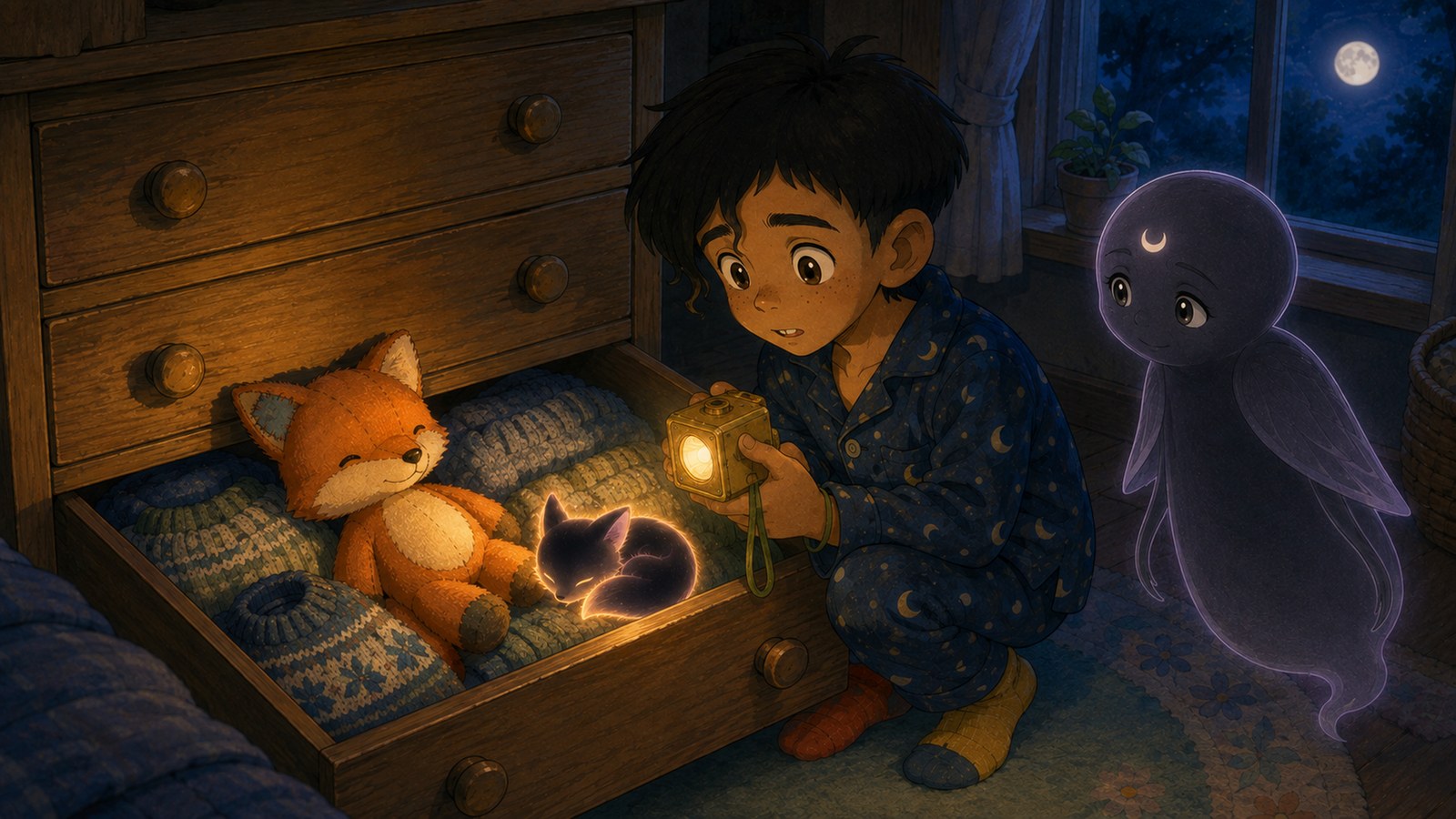
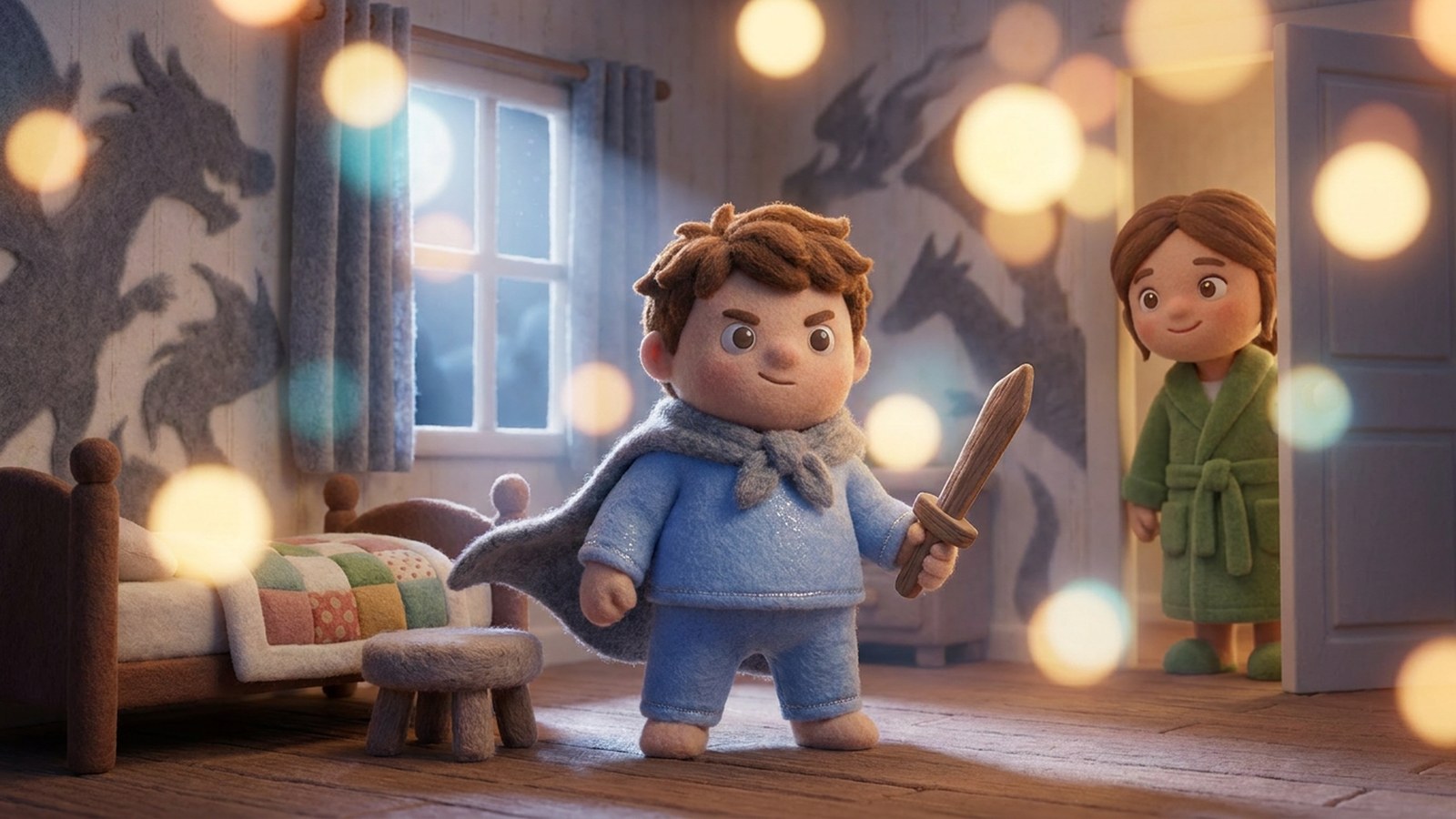
Telling a frightened child to “think of something happy” rarely works. Giving them a different, gentle picture to look at does. A short story where a frightening thing turns out to be small, lost or misunderstood replaces the loop with a new one, and the calm ending gives the mind somewhere to land.
Stories where the scary thing turns out gentle


Stories that make big things feel understood
Sometimes what a child needs is not distraction but a way to understand. Loud, sudden or unfamiliar things feel less frightening once they have a name and a calm adult beside them.
Calm stories about big sounds and kind company



Easing off screens in the evening
If the frightening thing came from a screen, consider moving screen time earlier in the day and finishing with something calm and short. Our guides to reading on a tablet or phone and screen-free evening activities have practical swaps. Check what a child is watching before it plays — a thirty-second look is usually enough.
When to look for more help
Most scary-screen worries ease within a few nights. If your child keeps waking, avoids the room, or the fear is growing, helping an anxious child settle at bedtime and nightmares and night terrors go further, and a conversation with your paediatrician is a sensible next step if it persists.
Tonight, a slower story, a steady voice and a few extra minutes of company are enough. Browse the bedtime collection for more gentle picks, or try bedtime breathing exercises as a quiet last step before lights-out.