

Night Lights for Kids: Which Colour, How Bright, and When to Stop Using One
By the Wonderbin team · October 21, 2026
A night light is one of the smallest purchases in a child’s room and one of the most argued over. Warm or white? Plugged in low by the door or glowing beside the bed? Should it stay on all night, or switch itself off? The honest answer is that a good night light is a dim, warm, boring one — and that the light matters a little less than the routine around it.
What a night light is actually for
It has two jobs. The first is comfort: a child who wakes in a pitch-black room can’t tell where the wardrobe ends and the corner begins, and a faint glow turns the room back into the one they know. The second is practical — enough light for a sleepy walk to the bathroom or a quick nappy change without flicking on the main bulb and waking everyone up. If the light is doing either of those, it’s working. If it’s bright enough to read by, it’s doing a third job nobody asked for.
Colour, brightness and placement
- Warm over cool. Soft amber or a dim orange-red is gentler in the evening than white or blue light, which tends to feel alert and daytime-ish. “Warm white” is a fair starting point; “daylight” is not.
- Dim, then dimmer. You should be able to see the shape of the room, not the colour of the curtains. If you can read a book by it, turn it down or choose a lower setting.
- Low and indirect. A light plugged in near the floor, or one that washes a wall, is kinder than one that shines in the eyes. Avoid placing it where it throws a sharp moving shadow — a bright lamp behind a hanging coat is how a coat turns into a visitor.
- No flashing, no changing colours. A projector that rotates stars across the ceiling can be lovely for ten minutes and wearing for an hour. If your child enjoys one, pick a model with a timer so it ends on its own.
- Steady and silent. A light that hums, ticks or flickers adds to the noise a worried child is already listening for.
- Safe by design. Choose one that stays cool to the touch, with no loose small parts or trailing cable within reach of the bed.
On all night, or on a timer?
Both are reasonable, and it depends on the child. A timer that fades out after 20 to 30 minutes suits a child who simply needs help getting to sleep. A light that stays on at its lowest setting suits a child who tends to wake in the night and needs to see where they are. If your child wakes when the light clicks off, that is a sign to keep it on rather than a sign you’ve done something wrong.
If your child isn’t scared but simply likes the glow, there’s no need to fix anything. A night light is not a problem to be solved, and plenty of children use one happily for years.
Setting it up as part of the routine
A light works best when it belongs to the ritual rather than appearing as an emergency measure. Turn the big light off and the night light on together, as the last step before the story — and say so out loud, so it becomes a cue: “Big light off, small light on.” Letting a child press the switch or choose between two settings gives them a little control, which does more for a nervous bedtime than extra reassurance. For the wider picture, see our guide to a fear of the dark and the tips on setting up a cosy reading corner.
When and how to phase a night light out
There’s no required age. If you do want to move away from one, go slowly: switch to a lower setting for a week, then use a timer, then move the light further from the bed. Change one thing at a time and keep the rest of the routine steady. If the fear returns, step back to the last setting that worked and try again in a fortnight. Pushing a child into full darkness before they’re ready tends to cost more sleep than it saves.
Stories where the night is gentle

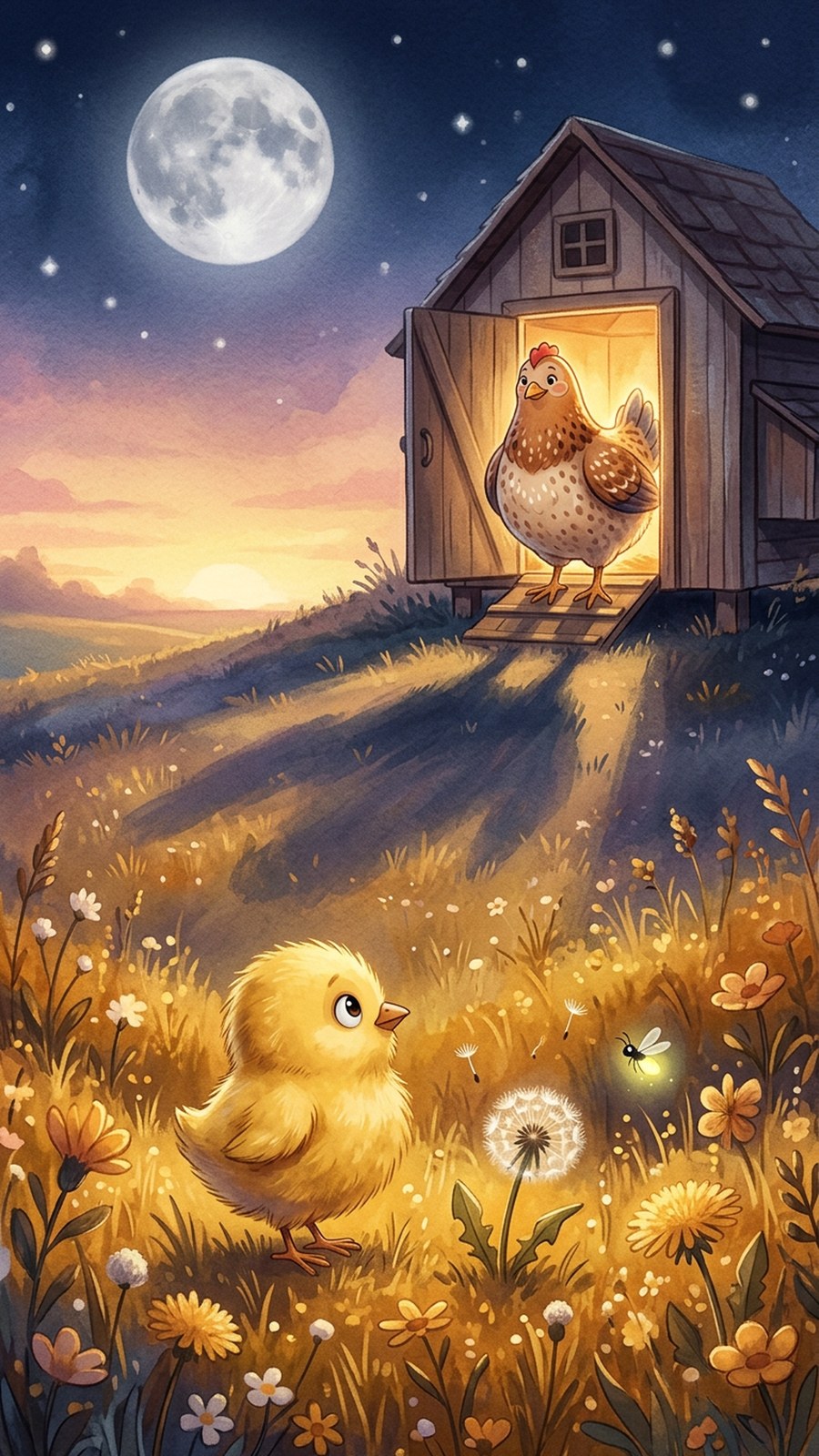

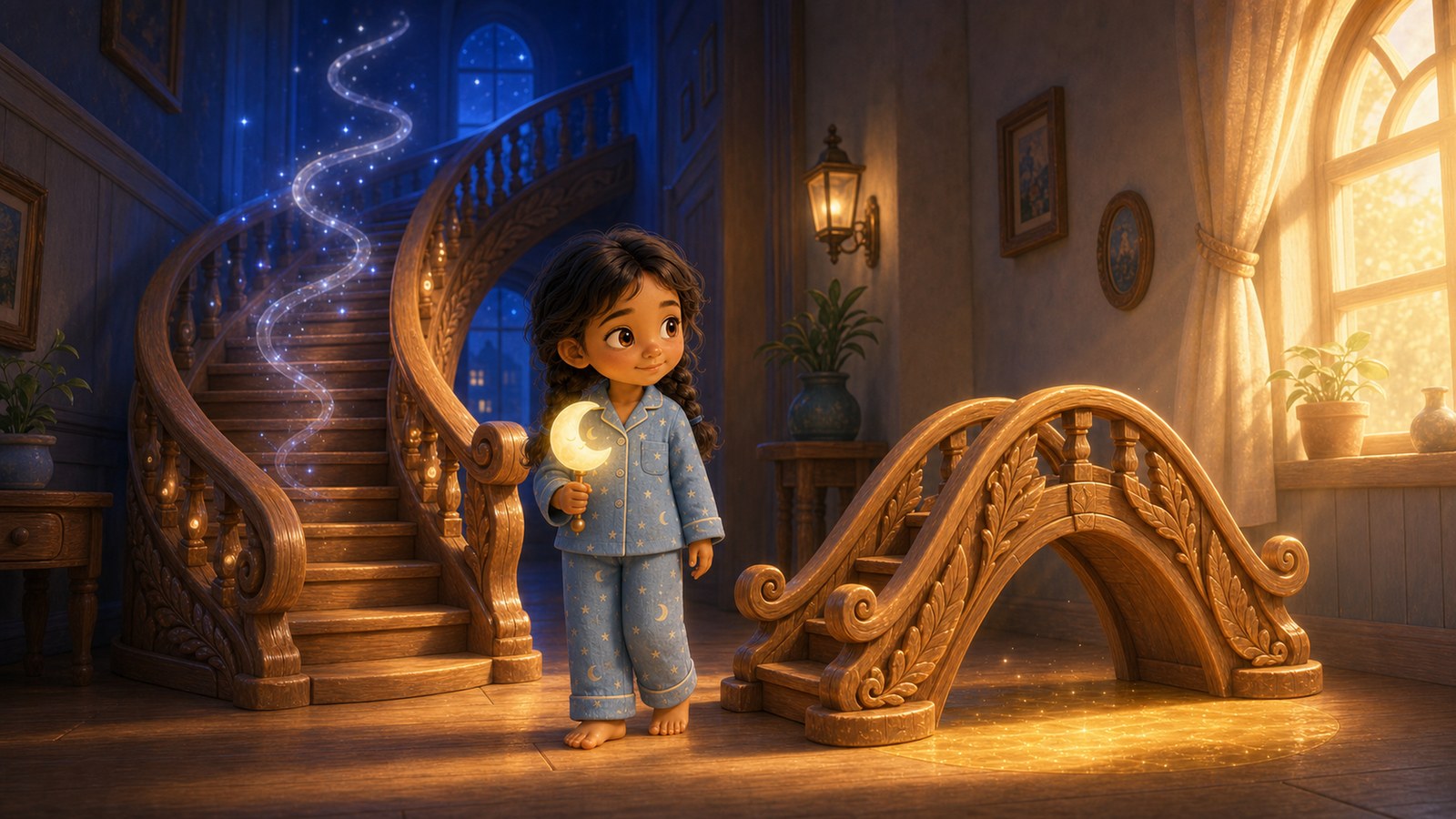

For a child watching the dark, it helps to meet a night that’s already full of friendly things. Lily’s Quiet Night Watch follows a puppy keeping watch over a quiet farmhouse, and Pip’s First Starry Night turns a chick’s fear of the dark into fireflies and stars.
Stories about small lights
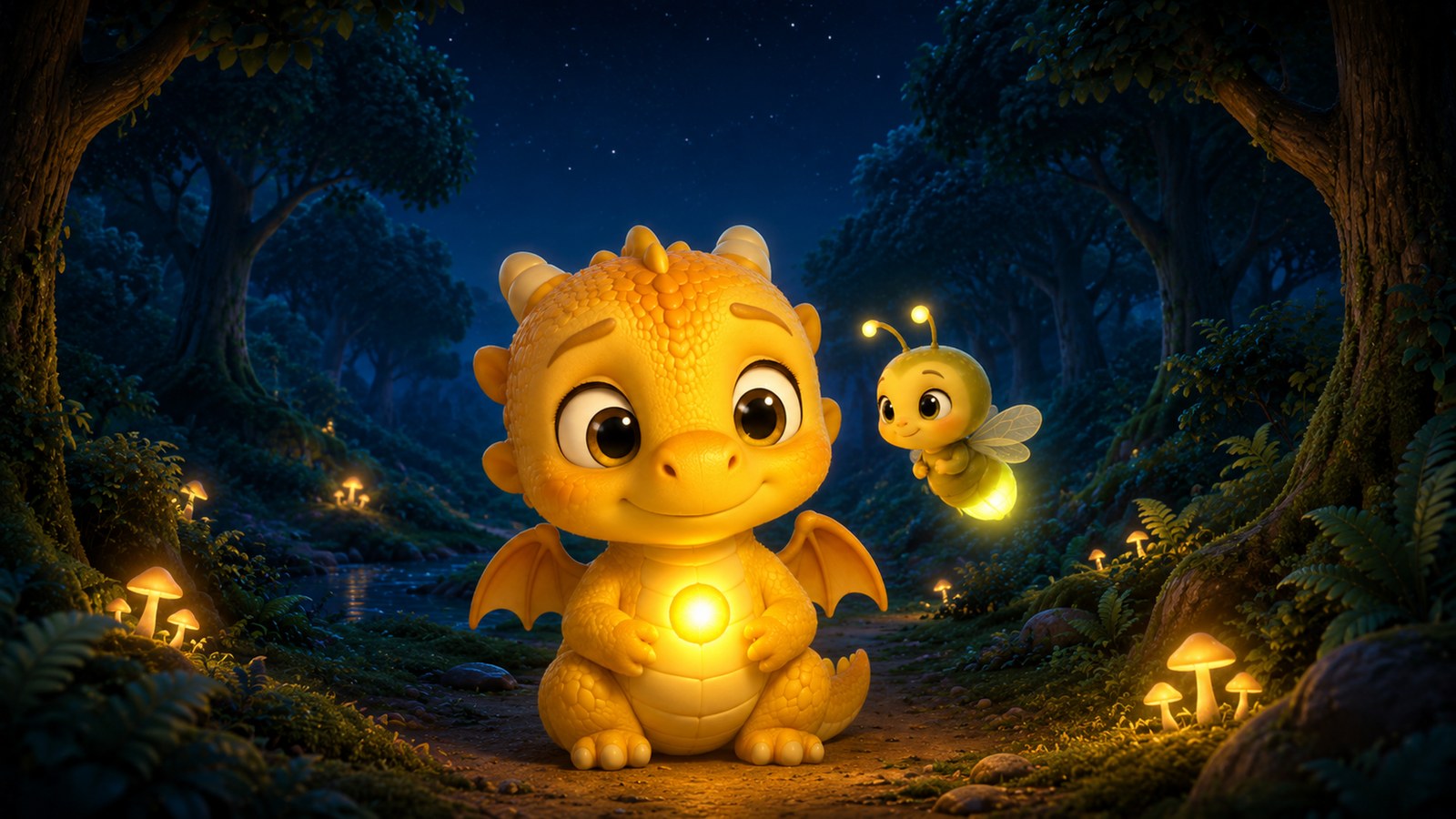



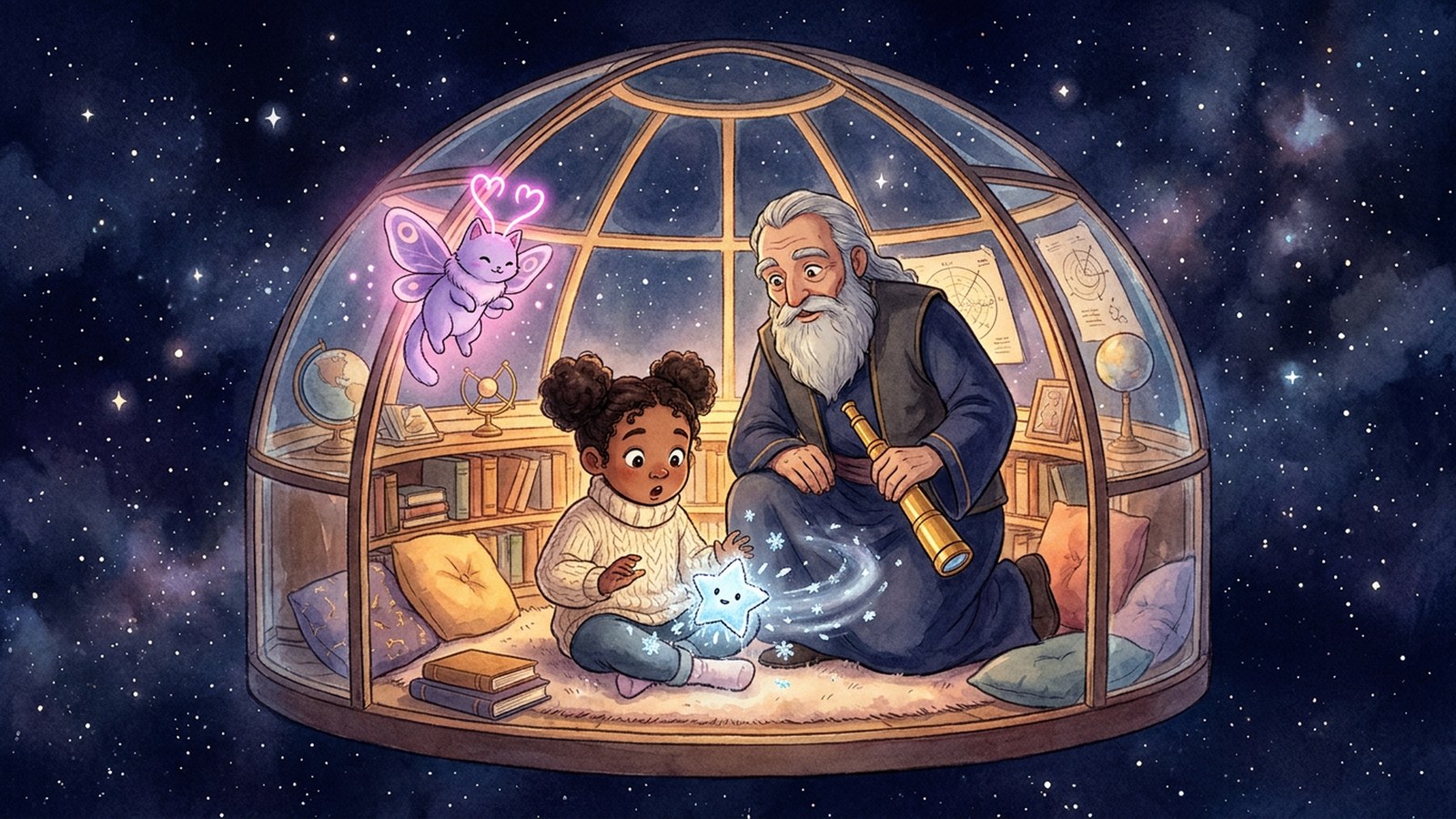
A glowing dragon, a lighthouse, a tiny car in a grandfather clock: these are stories in which a little light is exactly what’s needed — a quiet way to say that a small glow in the room is a good thing to have. Browse more calm picks in our bedtime story collection, and if worries are bigger than the dark, see helping an anxious child settle at bedtime.