

Bedtime Stories for Kids Who Are Afraid of the Dark
By the Wonderbin team · July 22, 2026
It usually arrives without warning. A child who has slept happily in a dark room for two years suddenly needs the hall light on, the door open exactly this much, and a full inspection of the wardrobe before anyone is allowed to say goodnight. Fear of the dark is one of the most common developmental fears there is — and one of the easiest to accidentally make worse, simply by arguing with it.
Why the dark gets scary around three or four
The fear tends to arrive at the same time as the imagination does. Somewhere between three and five a child becomes able to picture things that are not in the room — wonderful for play, inconvenient at bedtime, because the same new skill fills a dark corner with something that was never there. Darkness removes information, and a young brain does what all brains do with missing information: it guesses, and it guesses dramatically. This is not a sign that something is wrong. It is a sign the imagination is working, and it settles as a child gets better at telling the difference between what is imagined and what is in the room.
What actually helps at lights-out
- Take the fear seriously, not literally. “There’s nothing to be afraid of” is heard as “you are wrong”. “The dark feels bigger at night — I’ll stay while you settle” is heard as “I’m on your side”.
- Give the dark a shape. Walk the room together while the light is still on and name the silhouettes out loud: the coat on the hook, the chair, the lamp. Knowing what a shape belongs to is far more useful than being told it is nothing.
- Use a warm, low night light. Dim and amber, not bright and blue — enough to soften the room, not enough to keep the brain awake. A light pointed at the ceiling beats one pointed at the bed.
- Fix the door at an agreed gap. Decide it out loud, then keep it identical every night. Predictability is doing half the work here.
- Give them a job that fits inside the bed. A torch on the nightstand they may use once, a teddy who is officially in charge of the room, a blanket edge to hold. A small amount of control beats a large amount of reassurance.
- Finish with a story where the night is a nice place to be. The last pictures in a child’s head before lights-out are the ones they lie there with.
Why a night-friendly story does so much of the work
A frightened child is not short of facts — they are short of pictures. If the only images they have of the dark come from a cartoon villain and their own imagination, the dark stays a threat. A story set at night, where the moon is kind and the shadows have ordinary explanations, quietly hands over a different set of pictures to reach for. Read a few across a couple of weeks and the change often shows up before a child can describe it: the hall light gets negotiated down, then forgotten.
Gentle stories where the night is a friendly place
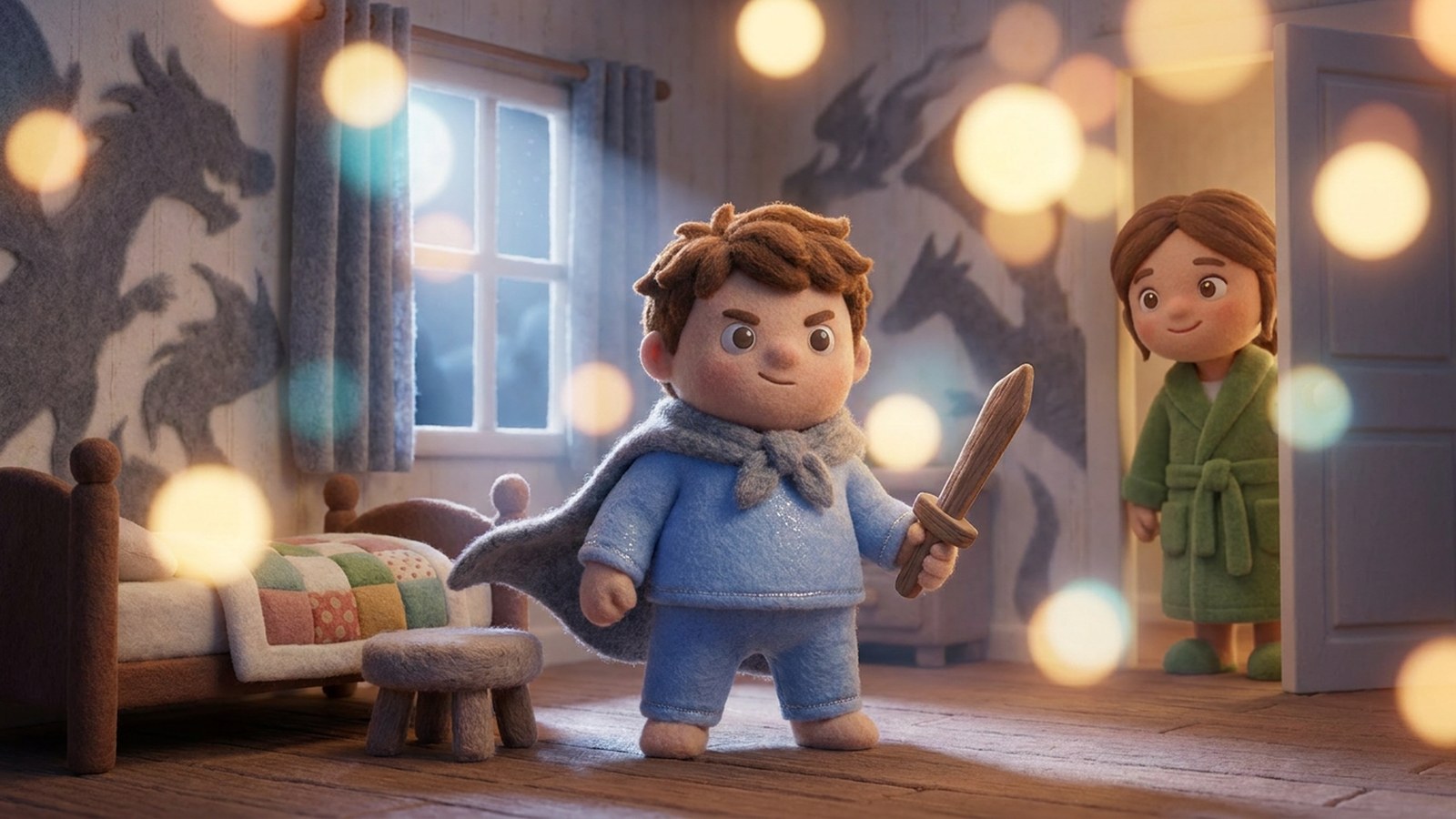

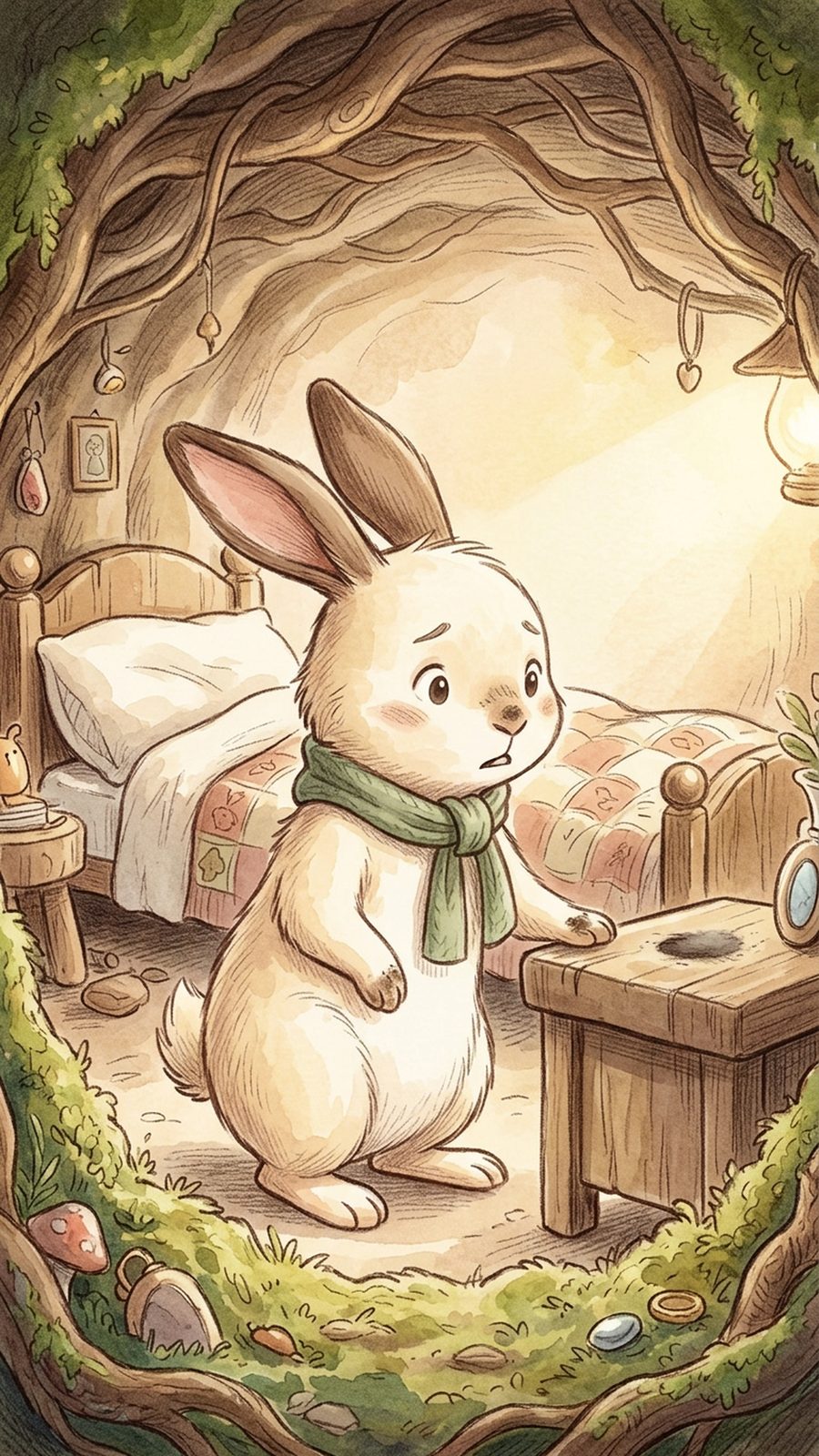
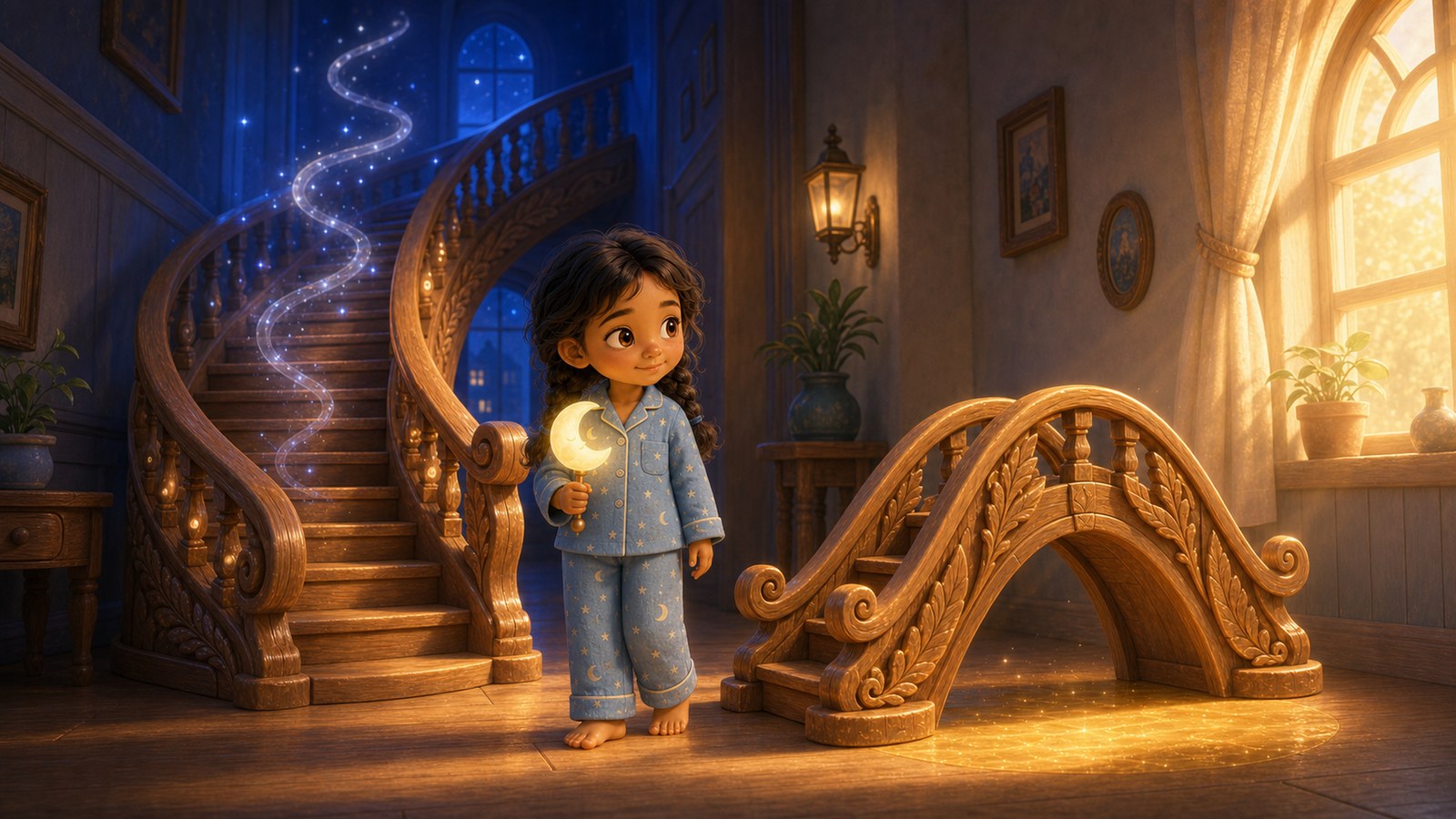

If the trouble is the room itself, start with Ralvin and the Midnight Shadows — it opens exactly where your child is, in a bedroom that turns quiet and enormous the moment the lights go out. If the trouble is the noises a house makes after dark, The Staircase That Feared Morning takes place in a home where every floorboard has its own bedtime sound.
What to skip
- Long debates about whether monsters are real. Arguing treats the monster as a fact worth checking. Acknowledge the feeling instead, then move to what makes the room feel safe.
- Repeat inspections. One calm check together is reassurance. The fifth check teaches a child that the room genuinely needs checking five times.
- A television or tablet as a night light. Bright, changing light delays sleep, and even mild content hands an anxious imagination new material at exactly the wrong hour.
- Scary stories earlier in the day to “toughen it up”. At this age it rarely builds resilience — it just adds images that come back at eleven at night.
Give it a couple of weeks. Most children move through this stage steadily as long as the response stays calm and the routine stays the same. If the fear is intense, keeps growing, or spills into the daytime — real panic at being alone in a lit room, nightmares most nights — mention it to your paediatrician, because that is a different problem with different answers. For the ordinary, developmental version the recipe is short: name the shapes, keep the light warm and low, hold the routine, and end with a bedtime story in which the dark is simply where the good part happens. More on the wind-down itself in our guide to calming a toddler before bed.