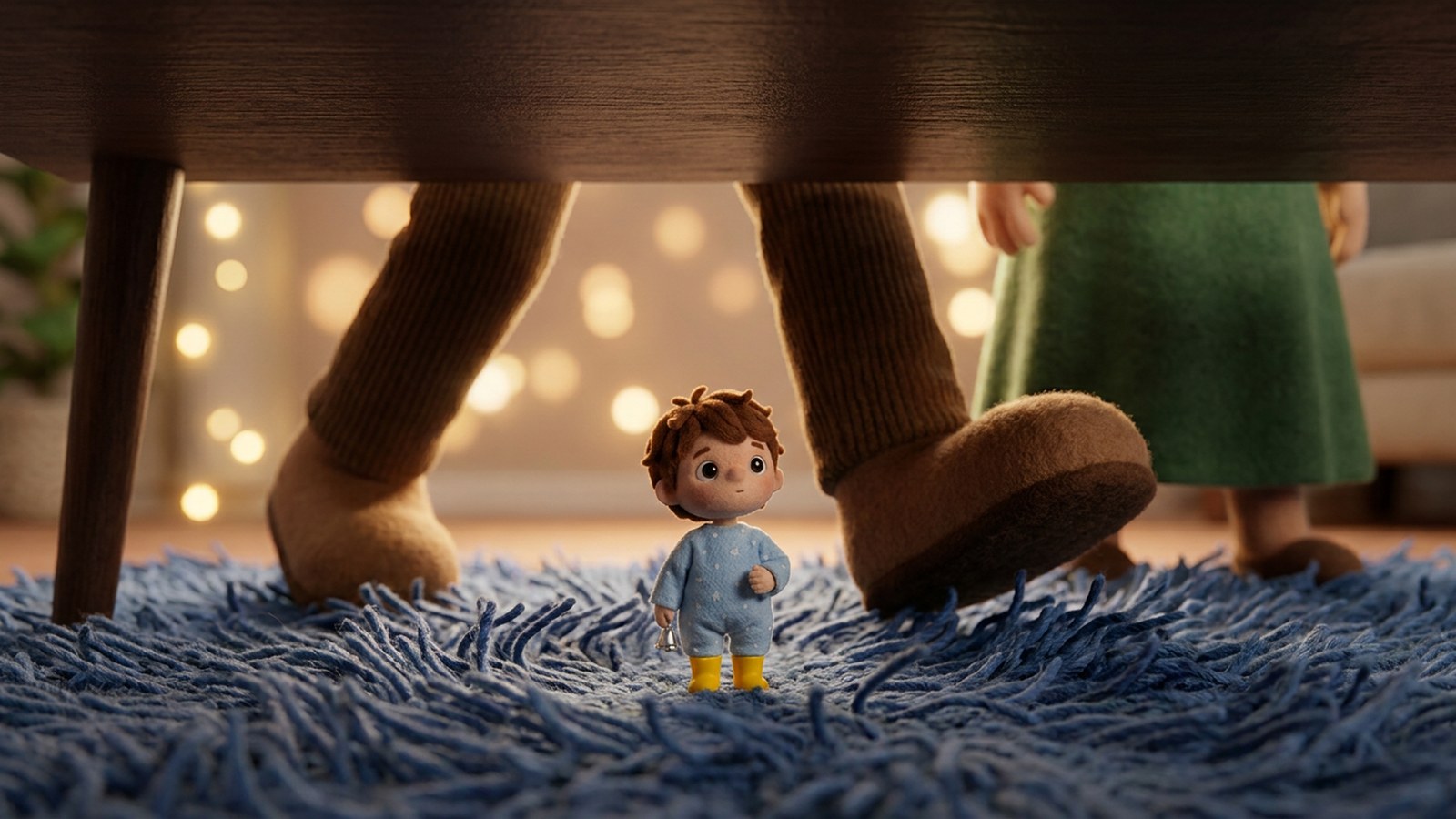


Under the floor of a great quiet house, where the people upstairs never thought to look, lived a village of little folk no taller than a spoon.

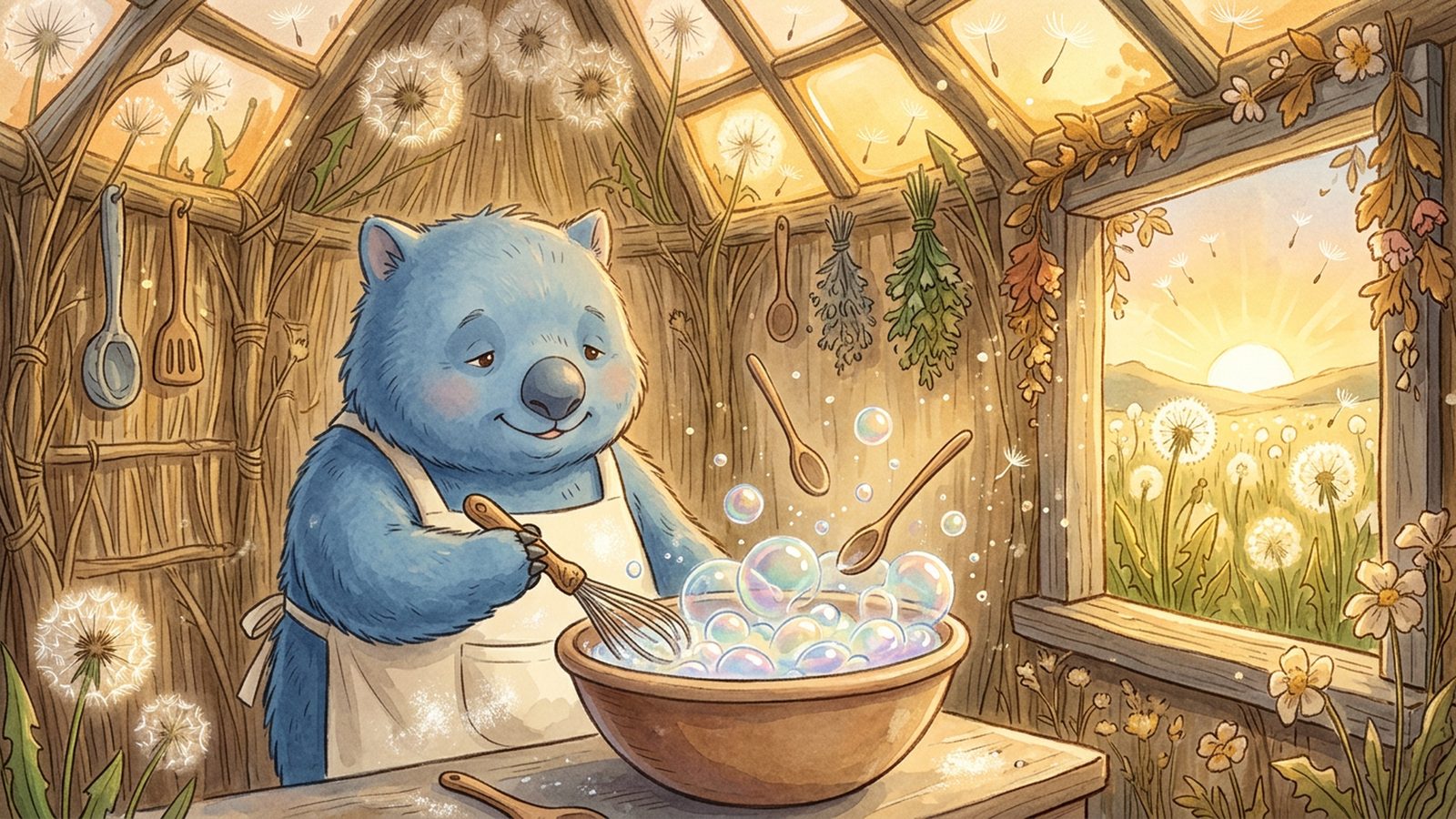
They had round cheeks and bare feet and the soft, curious faces of children, and they kept the snuggest, most orderly larder you could imagine: rows of seed sacks tied with grass, towers of dried apple rings, and acorn-cap bowls stacked in tidy steps.

In the very middle, like a great brown boulder, sat the Winter Potato — one enormous potato that, sliced thin and shared with care, could feed the whole village until the snow melted.

The smallest and clumsiest of all the little folk was a boy named Marlo, who tripped over his own feet, knocked over whatever he meant to carry, and somehow always ended up wearing the very thing he was supposed to be tidying.
That morning old Bogdan, keeper of the stores, cut a fresh notch in the doorpost to count the days down to the first frost, frowning, because there were not many notches left. And when he turned, he saw something that made the whole larder go quiet: a long, deep scratch gouged into a seed sack, far too big for any mouse — the mark of a hungry, burrowing beetle.