

Bedtime and Thunderstorms: Helping a Child Scared of Loud Weather
By the Wonderbin team · September 9, 2026
A storm rolling in after dark can turn a calm bedtime into a battle within minutes — the flash, the pause, the crack of thunder, and a small heart racing well past sleepy. Unlike most bedtime fears, this one is not really about imagination: something loud and real is happening outside, and a young nervous system is reacting to it exactly as it is built to. Here is what actually helps, both during the storm and on the ordinary evenings between them.
Why storms feel bigger after dark
During the day a storm is a spectacle behind a window, often shared with an adult who is clearly unbothered. At night the same storm arrives in a dark, quiet room, usually while a child is alone and already a little more sensitive than they were at noon. The noise is not louder — the context around it is simply offering fewer reassurances.
While the storm is happening
- Name it plainly. “That is thunder — the sound clouds make after lightning. It cannot come inside.” A short, factual sentence does more than a long comforting one.
- Give the gap a job. Counting the seconds between the flash and the thunder — light arrives before sound — turns an unpredictable noise into a countdown a child can follow, and a countdown is far easier to sit through than a startle.
- Turn one light on, not all of them. A single warm lamp softens the flashes without turning the room into daytime, which only makes it harder to settle once the storm has passed.
- Stay, and stay boring. Sit close, keep your voice low and slightly unbothered, and resist narrating how big the storm is. A calm, mildly uninterested adult is the fastest way to tell a child’s body that this is manageable.
- Skip “there is nothing to be scared of.” There plainly is something happening — loud, sudden, real. “It is loud, and you are safe” says both things without asking a child to argue with their own senses.
Once the worst of the noise has passed, a story is often the fastest way back to sleepy — something with its own gentle rhythm to replace the one the storm interrupted.
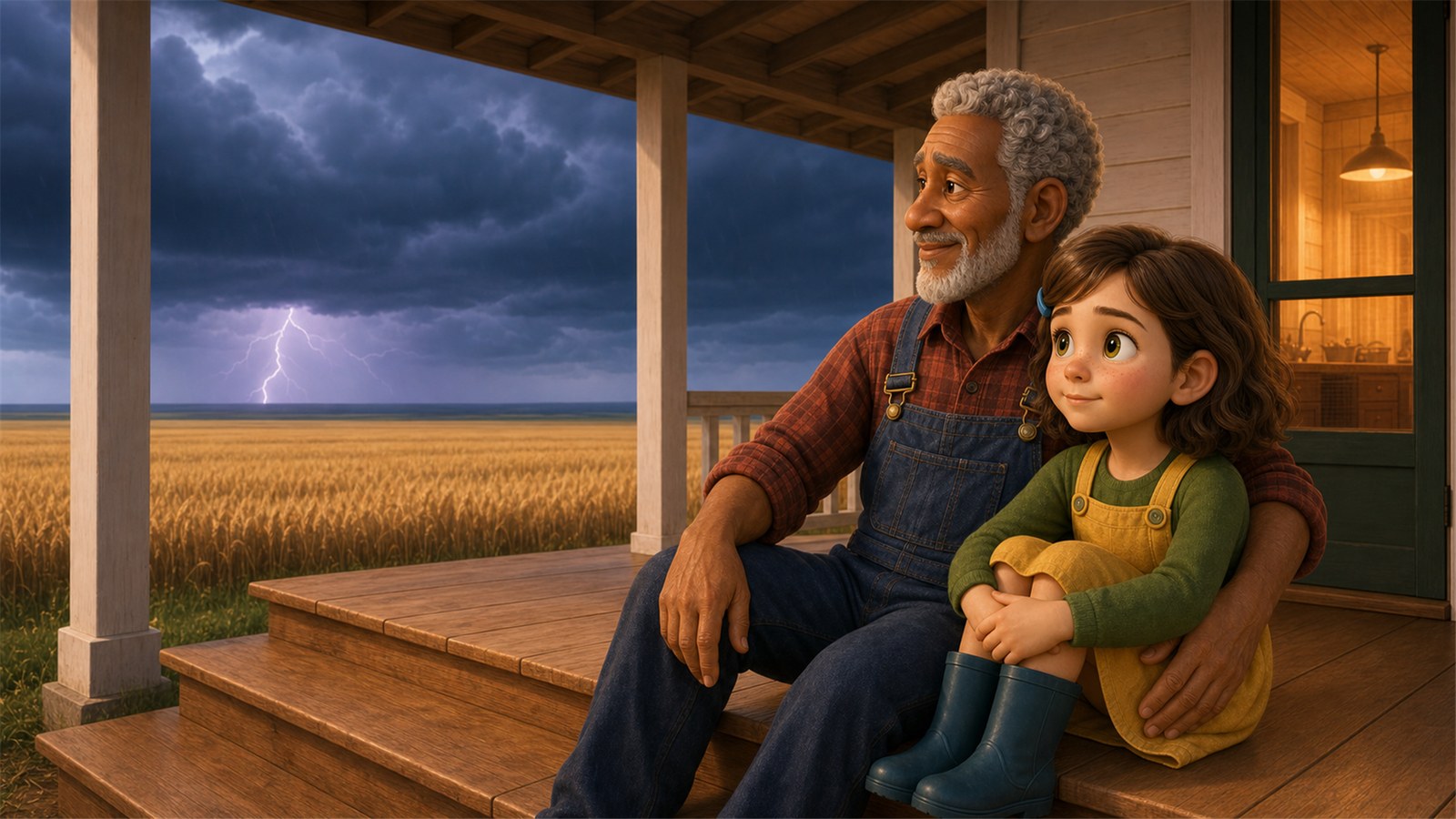
Stories about storms, and the calm that follows them


Building confidence between storms
A single calm night rarely fixes a storm fear on its own — it is the ordinary evenings in between that do the real work. Talk about weather in the daytime, in plain, curious terms rather than bedtime-only terms, so thunder is not a subject that only ever comes up when a child is already frightened. If storms are forecast, a short heads-up earlier in the evening — “it might get noisy tonight, and we will do exactly what we always do” — often does more than any explanation offered mid-storm.
For fears that show up on ordinary clear nights too, our guide to bedtime stories for kids afraid of the dark covers the wider pattern, and helping an anxious or worried child settle goes further into the underlying wobble. Browse the full bedtime collection for more gentle, reassuring reads.