

Bedtime in a Small Home: Open-Plan Flats, Shared Walls and Adults Still Up
By the Wonderbin team · November 24, 2026
In a small home, bedtime does not get a separate floor of the house. The child’s bed may be in the corner of a living room or a bedroom off the kitchen, and the grown-ups are still talking, cooking or watching something a few feet away. It is not ideal, but many children sleep perfectly well in homes like this. What helps is making the sleeping space feel set apart, even when it is not.
Make the sleep space feel like a room
- Define the zone. A bookcase, a curtain on a rail or a folding screen tells the eye where the bedroom starts. It also stops the child seeing the lit-up rest of the room.
- Keep the bed for sleeping. If the bed is also a sofa, a different throw and cushions at night can mark the change.
- Tidy toys out of sight. A basket with a lid, or a cupboard door pulled shut, helps a room that doubles as a playroom switch off.
- Use warm, dim light. A low lamp on the grown-up side of the room is kinder than overhead lights, and a small night light by the bed keeps it cosy. Our piece on night lights has colour and brightness tips.
If you are setting up a reading spot, a cosy bedtime reading corner works even in a very small footprint.
Keep the noise low, without tiptoeing all evening
A quiet conversation rarely ruins a child’s sleep. Sudden sounds and bright screens are the bigger problem.
- Time the loud jobs. Run the dishwasher, the washing machine and the blender before the wind-down starts, not during it.
- Turn the telly down and the subtitles on. Headphones are better still for a late film or game.
- Soften the room. Rugs, curtains and a closed door absorb more sound than people expect, and a draught excluder along the bottom of a door helps with light as well as noise.
- Consider a steady background sound. A fan or soft sound can cover the ordinary noise of a flat. See white noise and sound machines for how to do it sensibly.
When the grown-ups are still up
Seeing adults carry on is what makes a child ask, “Why can’t I stay up?” An honest, short answer works best: “That is grown-up time. Your body is growing and needs sleep.” Then keep your own evening visibly calm.
- Give the evening a quiet mode. Once the child is in bed, keep voices low, light soft and the telly down.
- Say goodnight properly, then leave. A clear end to the routine tells the child the day is over, even if you are still in sight.
- Read in the same room. If you read too, a child sees that the evening is winding down for everyone, which is easier than being the only one in bed in a busy room.
Whole worlds inside one room

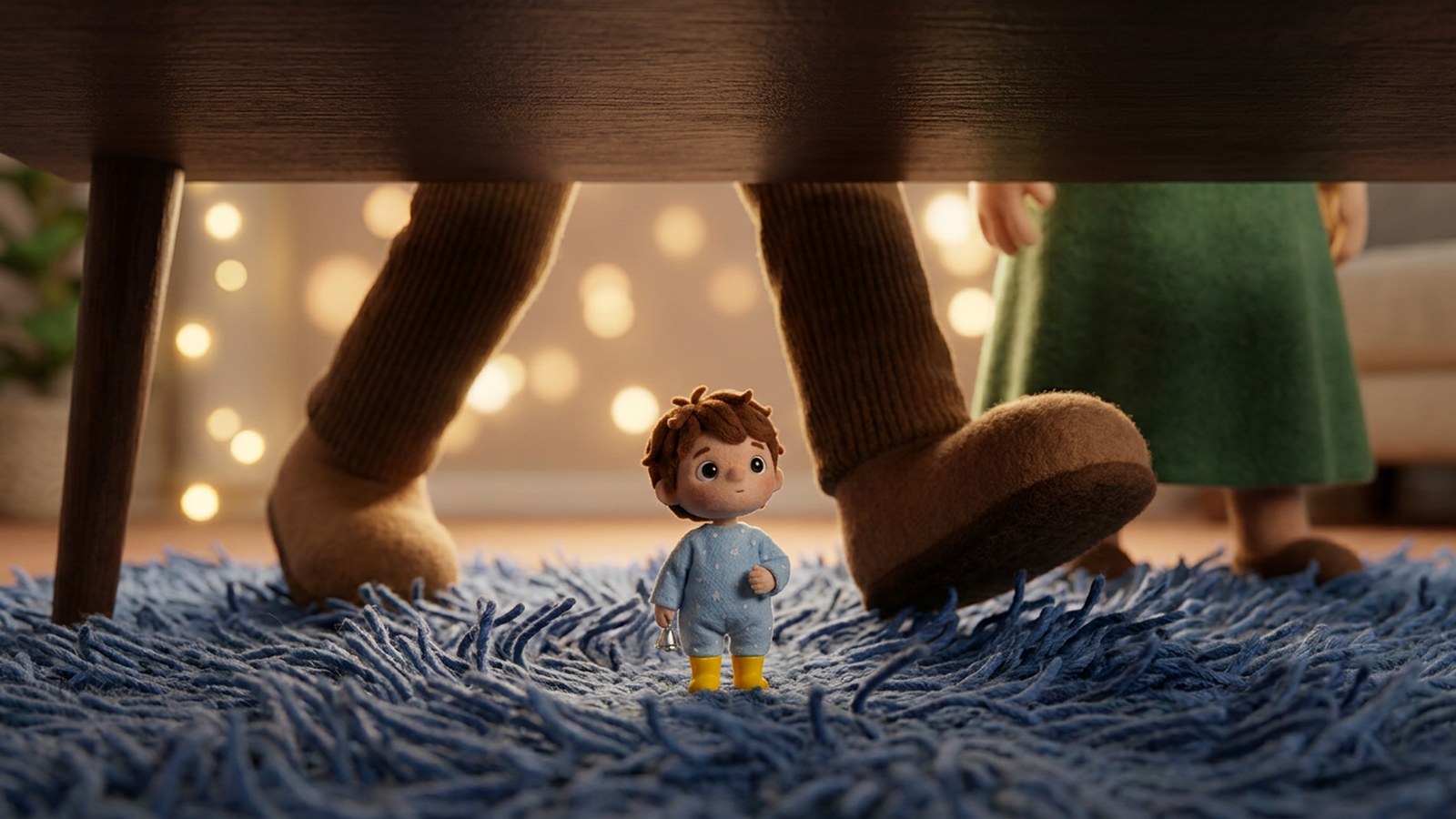

Sharing a room with a sibling, or with you
In many small homes the bedroom is shared. Our guide to siblings who share a room covers keeping two routines apart. If your child still sleeps in your room, moving out of the family bed offers gentle steps for when you are ready.
Small homes with a lot of heart


Make small feel snug, not cramped
A small space can be a gift at bedtime: everything is close, and a child can hear a familiar voice from across the room. Lean on that. Read from the end of the bed, keep the story soft, and let the closeness do some of the work.
For a calm routine you can keep in any size of home, try the 15-minute bedtime routine, or browse the bedtime stories shelf for tonight’s story.